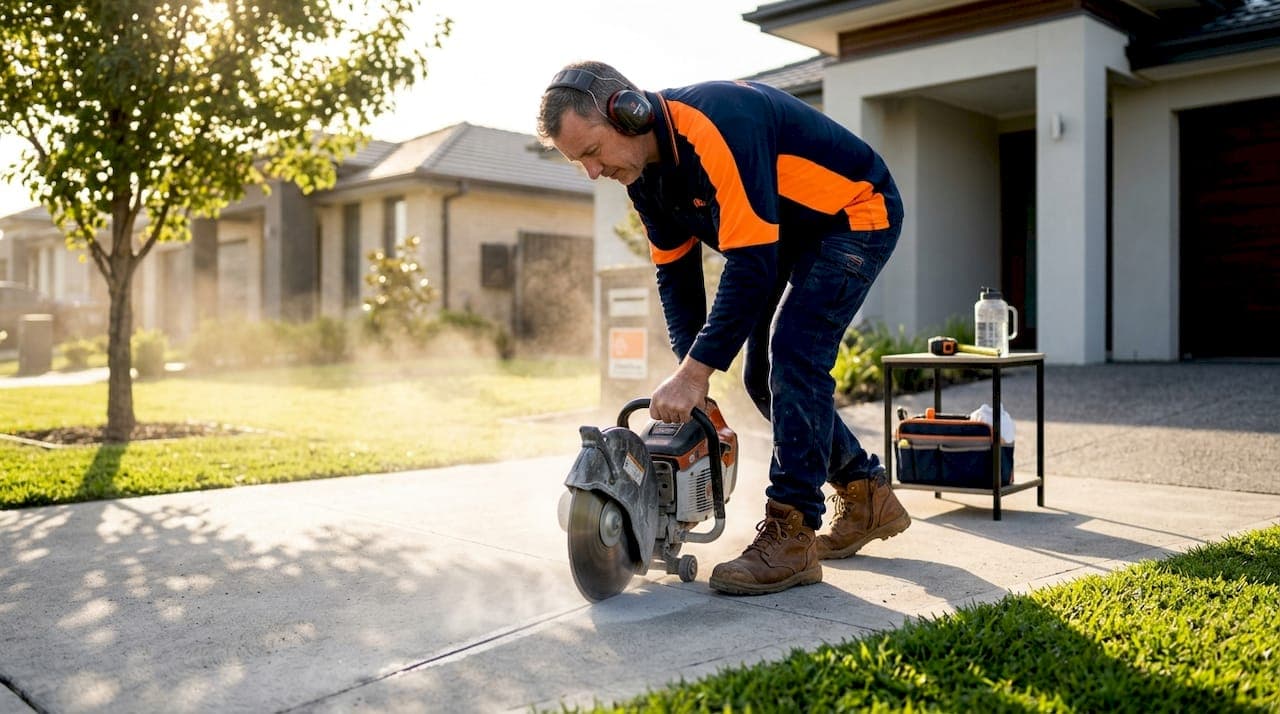
Concrete saw cutting cost is one of those line items that catches property owners and contractors off guard more often than it should. Most people assume it’s a simple, flat rate. It isn’t. Prices shift based on what you’re cutting, how thick the slab is, whether rebar is involved, where the job is located, and a handful of other variables that contractors account for before they ever quote you a number. This guide breaks down what drives those costs, what realistic price ranges look like for common project types, and how to plan a budget that doesn’t fall apart mid-project.
Table of Contents
Key takeaways
| Point | Details |
|---|---|
| Costs vary by cut type | Slab sawing, wall sawing, core drilling, and control joints each carry different price ranges per unit. |
| Rebar raises your price | Reinforced concrete adds 30 to 75% to the base cost of any cut, so always confirm reinforcement before budgeting. |
| Depth drives pricing | Deeper cuts demand more blade passes and faster wear, pushing per-linear-foot costs significantly higher. |
| Minimum fees hit small jobs hard | Most contractors charge a minimum of $150 to $300, which can dominate the cost of a small or single-cut job. |
| Get multiple quotes | Concrete cutting service rates vary by region and contractor; comparing at least three bids protects your budget. |
What is concrete saw cutting cost by cut type
Not all concrete cuts are priced the same way. Contractors use different units depending on the type of cut, and understanding that before you receive a quote will help you read bids accurately.
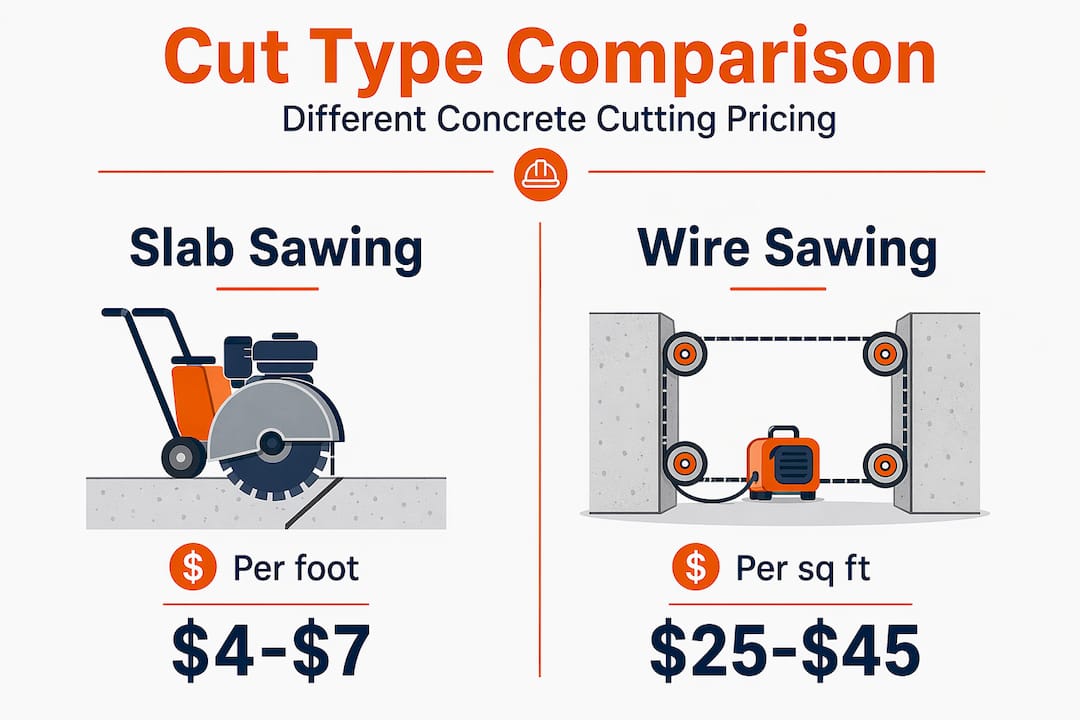
Slab sawing (also called flat sawing) is the most common type. It cuts horizontal surfaces like floors, driveways, and parking lots. Slab cutting runs $4 to $15 per linear foot, with standard 4-inch slabs falling in the $4 to $7 range and reinforced or deeper slabs pushing toward the higher end.
Wall sawing involves cutting vertical surfaces to create openings for doors, windows, or utility access. This method requires more complex equipment setup and operator skill. Wall sawing costs $8 to $25 per linear foot, reflecting that added complexity.
Core drilling is priced by hole diameter and depth rather than linear footage. A 4-inch hole through a 4-inch slab typically costs $40 to $120. Larger holes in the 6 to 12-inch range can run $150 to $600 per hole, and angled or overhead coring adds 25 to 40% to those figures.
Wire sawing handles thick structural elements like bridge sections or heavily reinforced walls. It’s priced per square foot and is generally reserved for commercial or infrastructure work.
Control joints are among the more affordable cutting services. These shallow cuts in new slabs prevent random cracking and are typically priced at $2 to $7 per linear foot.
Here’s a quick reference for concrete cut pricing by type:
| Cut type | Pricing unit | Typical range |
|---|---|---|
| Slab sawing (4-inch) | Per linear foot | $4 to $7 |
| Slab sawing (reinforced) | Per linear foot | $7 to $15 |
| Wall sawing | Per linear foot | $8 to $25 |
| Core drilling | Per inch of depth | $10 to $30 |
| Control joints | Per linear foot | $2 to $7 |
| Wire sawing | Per square foot | Varies by project |
Factors that affect your concrete cutting prices
Understanding the cost of saw cutting concrete means knowing what pushes prices up or down. Here are the main variables contractors factor into their quotes:
-
Slab thickness. Every additional inch of thickness increases blade wear and cutting time. An 8-inch or deeper cut can reach $12 to $20 per linear foot, compared to $4 to $7 for a standard 4-inch slab.
-
Rebar and post-tensioning. Reinforcement is one of the biggest cost drivers. Rebar adds 30 to 60% to base cost. Post-tension cables are even more sensitive because cutting them can cause catastrophic structural failure.
-
Wet vs. dry cutting. Wet cutting uses water to cool the blade and suppress dust. It produces cleaner cuts but generates slurry that must be collected and disposed of. Slurry disposal fees typically run $50 to $150 extra and are often listed separately in quotes.
-
Job accessibility. Indoor cuts with low overhead, tight spaces, or multi-story access require specialized equipment and more labor time. Overhead core drilling, for example, costs significantly more than a standard floor drill.
-
Geographic location. Labor rates differ across states and cities. Concrete cutting service rates in California or Colorado will differ from those in rural Texas or Arizona. Always factor regional pricing into your baseline expectations.
-
Minimum job charges. Most contractors charge a minimum of $150 to $300 regardless of how small the job is. For a single control joint or one core drill hole, the minimum fee often exceeds the per-unit cost.
-
Disposal and cleanup. Concrete debris, slurry, and dust management are not always included in base quotes. Confirm whether these are bundled or separate before signing anything.
Pro Tip: Always ask contractors to itemize their quote. A lump sum makes it impossible to compare bids or identify where costs can be reduced. Request line items for labor, blade wear, slurry disposal, and mobilization separately.
Budget estimates for common project types
Knowing how much does concrete sawing cost in real project terms helps you set a realistic budget before you contact a single contractor. Here are practical scenarios with numbers attached.
-
Residential driveway saw cut (50 linear feet, 4-inch slab, no rebar). At $4 to $7 per linear foot, expect to pay $200 to $350 for the cutting alone. Add a $150 mobilization fee and you’re looking at $350 to $500 total.
-
Reinforced garage floor cut (30 linear feet, 6-inch slab with rebar). Reinforced concrete with extra depth pushes cost to $10 to $15 per linear foot. Budget $300 to $450 for cuts, plus disposal fees of $75 to $150. Total range: $375 to $600.
-
Wall opening for a new door (8 linear feet, 8-inch wall). Wall sawing at $8 to $25 per linear foot means $64 to $200 for the cut itself. Equipment setup fees often add $100 to $200 more. Budget $200 to $400 for this scope.
-
Utility core drilling (4 holes, 4-inch diameter, 6-inch depth). At $10 to $30 per inch of depth, each hole costs $60 to $180. Four holes total: $240 to $720, before minimum fees.
-
Control joint cutting on a new 1,000 sq ft slab (100 linear feet). At $2 to $7 per linear foot, cutting costs run $200 to $700. Factor in timing fees if the contractor must return after pour.
Pro Tip: When you budget for concrete cutting, add a 15% contingency on top of your highest quote. Hidden reinforcement, unexpected slab thickness, or access issues discovered on-site can push costs beyond any initial estimate.
Here’s a summary table for quick reference:
| Project type | Estimated cost range |
|---|---|
| Driveway slab cut (50 LF) | $350 to $500 |
| Reinforced garage floor (30 LF) | $375 to $600 |
| Wall opening for door (8 LF) | $200 to $400 |
| Core drilling (4 holes) | $240 to $720 |
| Control joints (100 LF) | $200 to $700 |
For a more detailed breakdown of concrete cutting cost estimates, Usaconcretejobs has put together a thorough resource covering 2026 pricing standards across multiple project types.
Technical factors that affect cost and quality
Price isn’t the only thing that varies with concrete saw cutting. The technical side of the job directly affects both the final cost and whether the work holds up over time.
What is concrete saw cutting depth, and why does it matter so much? For control joints, the industry standard is one-fourth of the slab’s total thickness. On a 4-inch slab, that means a 1-inch cut depth. On a 6-inch slab, you need 1.5 inches. Cuts that are too shallow fail to guide cracking properly, which means the slab cracks randomly instead of along the joint. That leads to rework, and rework costs money.
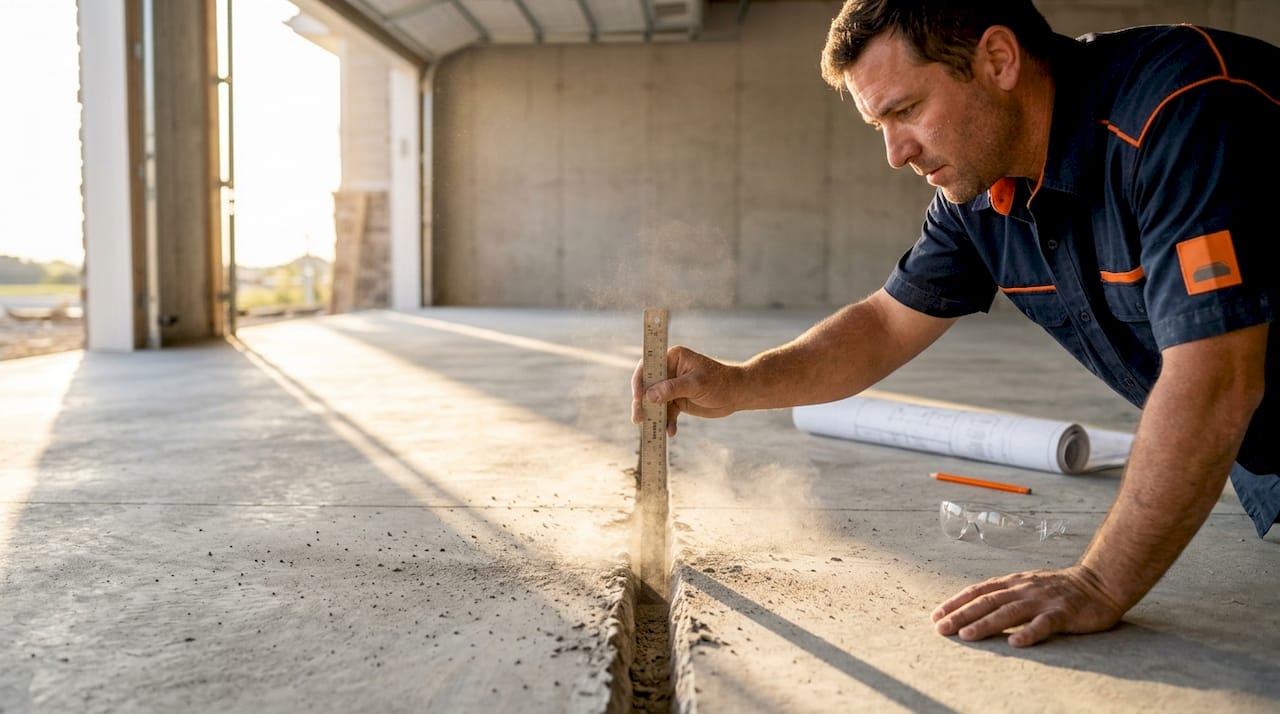
Timing matters just as much as depth. Saw cuts should be made within a few hours of concrete placement to prevent uncontrolled cracking. Wait too long and the concrete has already started cracking on its own terms. Cut too early and you risk raveling, where the saw tears the aggregate instead of slicing cleanly.
Before any cutting begins, the site needs to be assessed for what’s underneath the slab. Skipping pre-cut assessments risks cutting through post-tension cables, electrical conduits, or plumbing lines. That kind of damage doesn’t just delay the project. It can cause structural failure or require full slab replacement.
Here are the critical pre-cut checks that protect your budget:
-
Ground-penetrating radar (GPR) scan to locate rebar and post-tension cables
-
Utility locator markings for electrical, plumbing, and gas lines
-
Structural drawings review to confirm slab design specifications
-
Confirmation of slab thickness at multiple points across the work area
Experienced contractors monitor blade wear and cutting depth during the job to stay within design specifications. That attention to detail prevents re-cuts, which are one of the most avoidable cost overruns in concrete work.
My take on budgeting for concrete saw cutting
I’ve reviewed enough concrete cutting quotes and project post-mortems to say this clearly: the lowest bid almost never reflects the full cost of the job. What I’ve seen repeatedly is property owners accept a quote that looks clean on paper, then discover that slurry disposal, weekend rates, or a mobilization fee were never included. By the time those line items surface, the project is already underway and there’s no real leverage to push back.
What I’ve found actually works is asking for a fully scoped quote before anything else. That means asking specifically whether the quote includes blade wear for reinforced concrete, slurry disposal, debris removal, and any minimum charges. If a contractor can’t answer those questions clearly, that tells you something about how they run their jobs.
The other thing I’d push hard on is site inspection before finalizing any budget. I’ve seen projects where the slab turned out to be 2 inches thicker than the drawings showed, or where post-tension cables weren’t documented. Those discoveries mid-cut are expensive. A GPR scan before the job starts costs far less than a structural repair after.
If you’re comparing concrete cutting service rates across multiple contractors, use the same scope for every quote. Different assumptions in each bid make comparison meaningless. Get everyone quoting the same linear footage, the same depth, and the same disposal requirements. Then compare.
— Jack
Find licensed concrete cutting contractors near you

If you’ve done the research and you’re ready to move from budgeting to hiring, Usaconcretejobs connects you with licensed and insured concrete cutting contractors across Texas, Florida, California, Arizona, and Colorado. Every contractor in the network carries proper licensing and insurance, so you’re not taking a risk on an unverified crew.
Whether you need concrete cutting in Texas, a wall opening for a California commercial project, or control joint cutting on a new Colorado slab, Usaconcretejobs can match you with a qualified local contractor. The platform also offers free estimates and permit assistance so you’re not navigating local regulations on your own. Visit Usaconcretejobs to request your free quote and get a realistic cost estimate from a contractor who knows your region’s pricing and requirements.
FAQ
What is the average concrete cutting cost per linear foot?
The average concrete cutting cost runs $4 to $15 per linear foot for slab sawing, depending on slab thickness and whether rebar is present. Wall sawing costs more, typically $8 to $25 per linear foot.
How does slab thickness affect the cost of saw cutting concrete?
Thicker slabs require more blade passes, faster blade wear, and longer cutting time. Deep cuts of 8 inches or more can reach $12 to $20 per linear foot, compared to $4 to $7 for a standard 4-inch slab.
What is concrete saw cutting depth for control joints?
The standard saw cut depth for control joints is one-fourth of the slab’s total thickness, per ACI guidelines. For a 4-inch slab, that means cutting to approximately 1 inch deep.
Are there hidden fees in concrete cutting quotes?
Yes. Common costs not included in base quotes are slurry disposal ($50 to $150), mobilization fees, minimum job charges ($150 to $300), and weekend or after-hours surcharges. Always request an itemized quote.
How do I get an accurate budget for concrete cutting?
Get at least three itemized quotes from licensed contractors using the same project scope. Add a 15% contingency for unexpected site conditions like undocumented rebar or slab thickness variations.