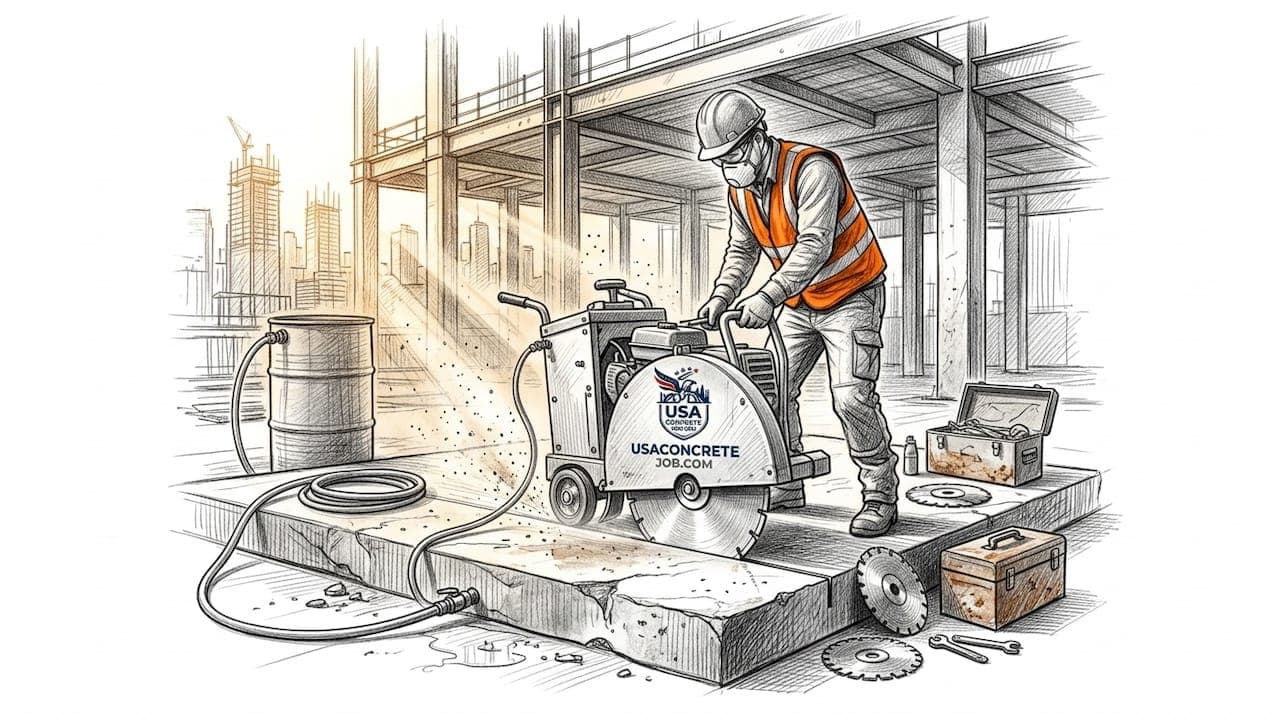
TL;DR:
- Concrete cutting is a hazardous task requiring trained professionals to control silica dust, utilities, and structural risks. Specialists use advanced equipment like wet saws, HEPA vacuums, and proper blades to ensure safety and compliance with OSHA regulations. Hiring licensed experts minimizes health risks, legal penalties, and long-term project costs.
Concrete cutting is a specialized construction task that demands trained operators, professional-grade equipment, and strict regulatory compliance to execute safely and accurately. The reason why concrete cutting requires specialists goes beyond simple tool operation. Cutting concrete releases respirable crystalline silica, a hazardous airborne particle regulated by OSHA to a permissible exposure limit of 50 micrograms per cubic meter over an eight-hour shift. Specialists use wet cutting systems, HEPA vacuums, and diamond blades rated for specific materials to control these hazards. Without that expertise, you risk health violations, structural damage, and costly project failures.
Why concrete cutting requires specialists: the core hazards
Concrete cutting is one of the most hazardous construction tasks a crew can perform. That classification exists because the risks are not limited to blade contact. They span airborne toxins, embedded utilities, structural instability, and noise exposure that accumulates over a shift.
The most serious hazard is respirable crystalline silica dust. Dry cutting concentrations can reach up to 280 times the recommended exposure limit, according to NIOSH data. Chronic silicosis caused by silica inhalation is irreversible and continues to progress even after exposure stops. That fact alone explains why untrained workers cannot safely perform this task without proper controls.
Beyond silica, concrete cutting presents several additional hazards that require specialist knowledge to manage:
- Rebar and embedded metal: Cutting through reinforced concrete without diamond blades rated for metal risks dangerous kickbacks and sends metal particles toward the operator's face and eyes.
- Embedded utilities: Electrical conduits, water lines, and gas pipes are frequently hidden inside concrete slabs. Specialists use ground-penetrating radar or utility scanning before any cut.
- Vibration and noise: Prolonged exposure to tool vibration causes hand-arm vibration syndrome. Noise levels from concrete saws regularly exceed 100 decibels, requiring hearing protection and exposure limits.
- Depth-related forces: Larger diameter blades used for deep cuts produce significantly more dust and reactive forces, requiring specialized operator skill to control safely.
DIY attempts or untrained workers frequently underestimate these compounding risks. A misaligned cut in a load-bearing slab can compromise structural integrity. A dry cut in an enclosed space can expose everyone nearby to silica levels that cause permanent lung damage within a single shift.
Pro Tip: Never assume a concrete surface is free of embedded utilities. A licensed specialist will always scan or review structural drawings before the first cut.
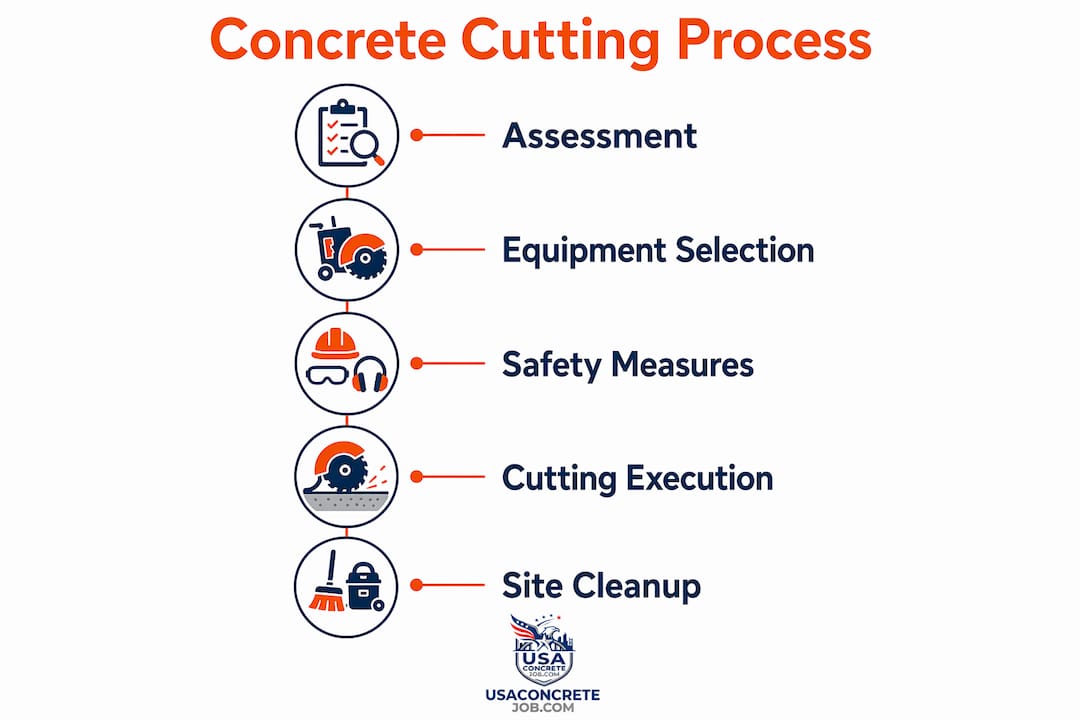
What equipment and methods do specialists use?
Professional concrete cutting relies on a specific set of tools and techniques that are not available at a standard hardware rental counter. The choice of equipment directly affects dust control, cut accuracy, operator safety, and project speed.
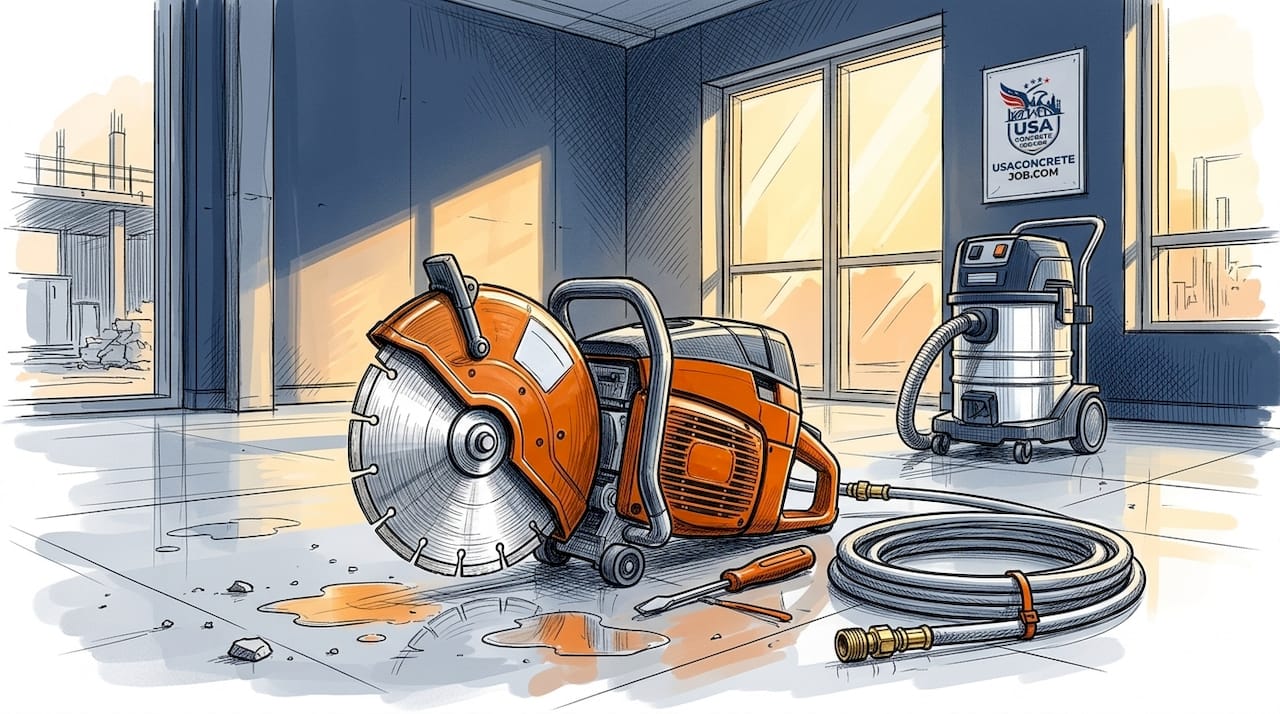
Wet cutting with integrated water delivery is the primary dust suppression method used by specialists. Water introduced at the blade during cutting suppresses silica dust at the source, which is the most effective engineering control available. Standard floor saws cut at two to three meters per hour, while larger commercial machines with dust control systems reach four to five meters per hour. That speed advantage comes directly from using the right equipment.
The table below shows how different saw types compare across key project factors:
| Saw type | Best use case | Dust control method | Accuracy level |
|---|---|---|---|
| Handheld angle grinder | Small openings, wall cuts | HEPA shroud or wet attachment | Moderate |
| Walk-behind floor saw | Flat slab cutting, expansion joints | Integrated water delivery | High |
| Wall saw | Vertical cuts, window or door openings | Water feed system | Very high |
| Wire saw | Thick or irregular concrete sections | Water cooling | Very high |
HEPA shroud attachments and vacuum systems are used when wet cutting is not practical, such as in interior spaces where water runoff creates secondary hazards. HEPA vacuums and shrouds capture dust directly at the blade guard, preventing it from becoming airborne. This approach satisfies OSHA Table 1 engineering control requirements when applied correctly.
Blade selection is equally critical. Diamond blades are the industry standard for concrete, but the correct segment type, bond hardness, and diameter must match the specific concrete mix, aggregate hardness, and cut depth. Using a blade designed for soft aggregate on hard granite-aggregate concrete causes rapid segment wear and increases the risk of blade failure.
Pro Tip: Ask any contractor you hire to specify the blade type and dust control method they plan to use before work begins. If they cannot answer clearly, that is a red flag.
How does OSHA regulate concrete cutting compliance?
OSHA standard 29 CFR 1926.1153 governs silica dust exposure in construction, and concrete cutting falls squarely within its scope. Compliance is not optional, and the obligations extend well beyond wearing a dust mask.
The standard establishes a hierarchy of controls. Wet cutting and engineering controls must be implemented before respiratory protection is considered. Employers must provide fit-tested, NIOSH-approved respirators only when engineering controls alone cannot reduce exposure below the permissible exposure limit. Respirators are the last line of defense, not the first.
OSHA Table 1 offers a practical compliance path for concrete cutting operations. Following Table 1 exactly, including continuous water feed during cutting, eliminates the need for air monitoring. Deviating from Table 1 controls makes air monitoring mandatory and significantly increases compliance costs and legal exposure.
The full compliance picture for specialists includes:
- A written exposure control plan specific to each task and worksite
- Designation of a competent person responsible for silica compliance on site
- Medical surveillance for workers who wear respirators more than 30 days per year, including chest X-rays, lung function tests, and tuberculosis screening every three years
- Prohibition on dry sweeping or using compressed air for cleanup. Wet methods or HEPA vacuuming are the only permitted housekeeping practices under the silica standard
"Trained specialists use task-specific controls tailored to exact equipment and project needs. Generalized or DIY methods frequently fail to meet OSHA Table 1 requirements, triggering mandatory air monitoring and potential citations."
The financial consequences of noncompliance are significant. OSHA serious violations carry penalties up to $16,550 per violation as of 2026, and willful violations can reach $165,514. Beyond fines, a single silicosis diagnosis in a worker can result in litigation that far exceeds any savings from cutting corners on compliance.
What practical benefits do specialists provide?
Hiring a concrete cutting specialist delivers measurable advantages that go beyond avoiding regulatory penalties. The benefits of professional concrete cutting show up directly in project timelines, budgets, and long-term structural performance.
- Precision cuts protect structural integrity. Specialists assess load paths and reinforcement layouts before cutting. An imprecise cut in the wrong location can sever rebar that carries tensile load, leading to cracking or failure over time.
- Faster work reduces project downtime. Professional equipment cuts at higher speeds with less cleanup time. A job that takes an untrained operator a full day may take a specialist half that time, reducing labor costs and keeping your project on schedule.
- Proper cuts prevent water infiltration. Rough or jagged cuts in slabs and walls create pathways for water intrusion. Specialists produce clean, sealed edges that reduce the risk of moisture damage and the repair costs that follow.
- Specialists reduce your liability exposure. When a licensed, insured contractor performs the work, the legal and financial risk of an on-site injury or OSHA violation shifts away from the property owner. That protection has real dollar value.
- Accurate project assessment prevents costly rework. Specialists improve project efficiency by identifying potential complications before cutting begins, avoiding the expensive rework that results from improper cuts or unexpected material conditions.
For commercial projects in Texas, Florida, California, Arizona, and Colorado, these advantages compound. Permit requirements, local building codes, and inspection standards vary by state and municipality. A specialist familiar with regional requirements handles that complexity so you do not have to.
How do you choose the right concrete cutting specialist?
Selecting the right contractor requires more than checking for the lowest price. The cost of professional concrete cutting reflects the equipment, training, and compliance infrastructure behind the work. Choosing based on price alone often leads to the exact problems specialists are hired to prevent.
When evaluating contractors, verify the following before signing any agreement:
- Licensing and insurance: Confirm the contractor holds a current state contractor's license and carries general liability insurance plus workers' compensation coverage.
- Equipment inventory: Ask specifically whether they use wet cutting systems or HEPA shroud attachments, and whether their equipment matches your project type.
- Written safety plan: A qualified specialist will have a written silica exposure control plan and can name the competent person responsible for compliance on your site.
- References and past work: Request examples of similar projects, particularly those involving reinforced concrete or interior cuts where dust control is most critical.
Pro Tip: Request a written scope of work that specifies the saw type, blade specification, dust control method, and cleanup procedure. This document protects you and confirms the contractor knows what they are doing.
Understanding project costs upfront also helps you budget accurately. Specialist rates reflect real overhead: diamond blades, water delivery systems, HEPA vacuums, and compliance training are not cheap. A contractor who quotes significantly below market rate is likely skipping one or more of these requirements.
Key takeaways
Concrete cutting requires specialists because the combination of silica dust hazards, OSHA compliance obligations, structural precision requirements, and equipment complexity makes untrained attempts genuinely dangerous and legally costly.
| Point | Details |
|---|---|
| Silica dust is the primary hazard | Dry cutting produces dust up to 280 times safe limits; chronic silicosis is irreversible. |
| OSHA Table 1 defines compliance | Following Table 1 controls eliminates air monitoring requirements and reduces legal risk. |
| Equipment choice determines outcomes | Wet cutting saws, HEPA shrouds, and correct diamond blades are non-negotiable for safe, accurate work. |
| Specialists protect your liability | Licensed, insured contractors shift legal and financial risk away from property owners. |
| Vetting matters before you hire | Confirm licensing, written safety plans, and equipment specs before any work begins. |
The real cost of underestimating concrete cutting
I have reviewed enough concrete cutting projects to say this plainly: the most expensive mistakes I see are not from bad equipment. They are from the assumption that concrete cutting is a straightforward task that any capable person can handle with a rented saw.
The silica dust issue is the one that concerns me most. Most people cannot see silica particles. There is no smell, no immediate irritation, and no warning sign during the cut itself. Workers and property owners who watch a dry cut in an enclosed garage or basement have no idea they may have just inhaled enough silica to cause permanent lung damage. That is not a theoretical risk. NIOSH has documented it repeatedly.
What I find equally underappreciated is the structural side. I have seen residential projects where a homeowner cut through a slab to add a drain, only to discover months later that the cut had severed post-tension cables. The repair cost exceeded the original project budget by a factor of three. A specialist with access to structural drawings and a ground-penetrating radar scan would have avoided that entirely.
The contractors I trust are the ones who ask questions before they quote. They want to know the slab thickness, the reinforcement type, whether the space is enclosed, and what the concrete mix was. That curiosity is a signal of genuine expertise. If a contractor shows up, looks at the job for thirty seconds, and gives you a number, keep looking.
Find licensed concrete cutting specialists near you
If your project requires precision concrete cutting, working with a licensed professional is the straightforward path to getting it done safely and correctly.

USAConcreteJobs connects homeowners and businesses with licensed, insured concrete cutting contractors across Texas, Florida, California, Arizona, and Colorado. Every contractor in the network carries proper licensing, uses compliant dust control equipment, and can provide written safety plans on request. Whether you need a flat saw cut in a commercial slab or a wall opening in a residential foundation, USAConcreteJobs matches you with the right specialist for your project. Get a free estimate by calling the licensed contractor hotline at (833) 722-3359, or browse concrete cutting specialists in Colorado and Texas concrete cutting services to find local professionals today.
FAQ
Why can't I just rent a concrete saw and do it myself?
Renting a saw does not provide the dust control systems, blade expertise, or OSHA compliance knowledge that concrete cutting requires. Dry cutting without proper engineering controls can produce silica dust at levels up to 280 times the safe limit, creating serious and irreversible health risks.
What is OSHA Table 1 and why does it matter for concrete cutting?
OSHA Table 1 is a compliance reference under standard 29 CFR 1926.1153 that specifies approved engineering controls for silica-generating tasks including concrete cutting. Following Table 1 exactly, such as using continuous water feed during cutting, eliminates the need for costly air monitoring and reduces legal liability.
How much does professional concrete cutting cost?
Costs vary based on slab thickness, reinforcement type, cut length, and location, but professional rates reflect real overhead including diamond blades, wet cutting systems, and compliance infrastructure. Reviewing a detailed concrete cutting cost breakdown helps you budget accurately and identify bids that are suspiciously low.
What should I ask a concrete cutting contractor before hiring?
Ask for proof of licensing and insurance, the specific saw type and blade they plan to use, their dust control method, and a written silica exposure control plan. A qualified specialist will answer all of these questions without hesitation.
Is concrete cutting regulated differently for residential versus commercial projects?
The OSHA silica standard applies to all construction work regardless of project type, but commercial projects often face additional local permit and inspection requirements. A specialist familiar with state and municipal codes in Texas, Florida, California, Arizona, or Colorado will handle those requirements as part of the job.