TL;DR:
- Concrete repair permits are required mainly when work affects load-bearing elements, safety, or public right-of-way structures.
- Even exempt repairs must follow building codes, and multi-agency approvals are often necessary, especially in complex projects.
Concrete repair permit requirements are legal authorizations that determine whether your repair project can proceed lawfully under local, state, or federal building codes. The International Building Code (IBC), International Residential Code (IRC), and state-specific frameworks like the Florida Building Code all govern when permits apply. Whether you are fixing a spalling parking structure in Miami-Dade, replacing a cracked driveway in Evanston, Illinois, or repairing a retaining wall in San Diego, the permit rules differ. Knowing those rules before you break ground protects you from fines, stop-work orders, and failed inspections.
1. What determines if a concrete repair project requires a permit?
The single most important factor is whether the repair affects a structural element, a load-bearing component, or public safety. Permit decisions hinge on structural load paths and bearing capacity far more than the word "repair" implies. A contractor patching a hairline crack in a garage floor is doing cosmetic work. A contractor cutting through a concrete wall or removing a load-bearing support is doing structural work, and that always triggers a permit.
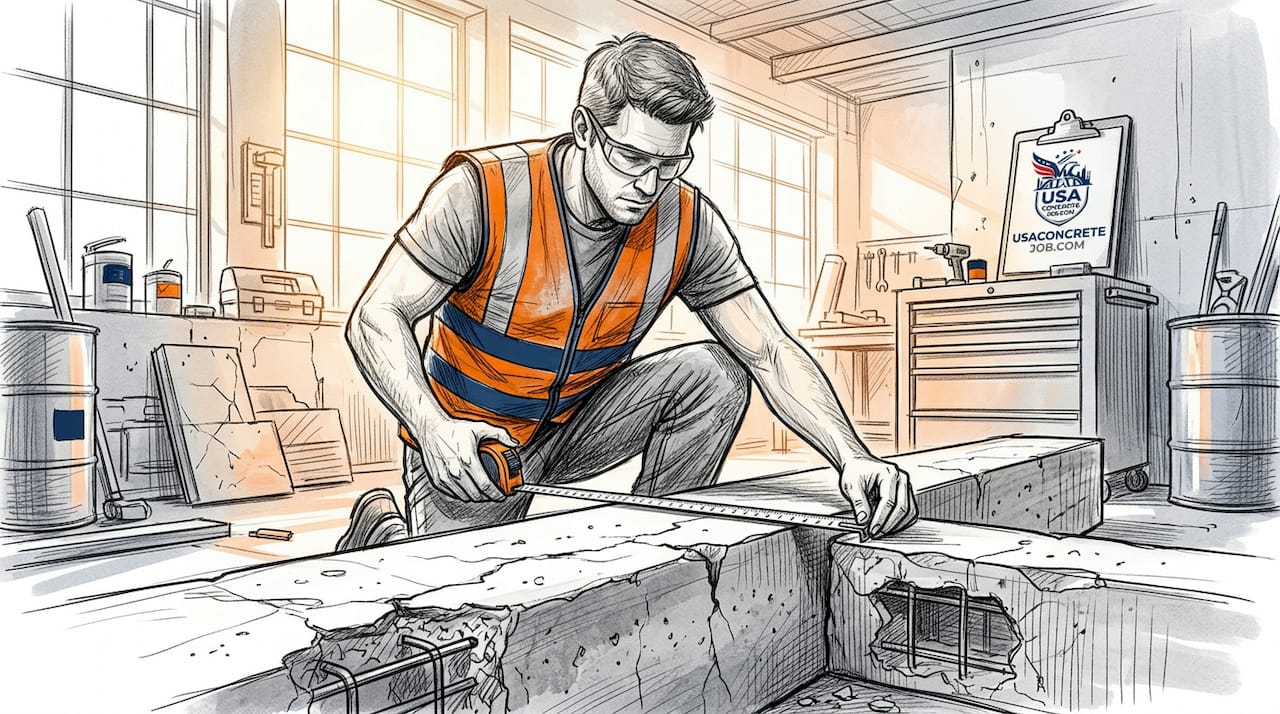
Hillsborough County, FL exempts non-structural concrete work that does not affect load-bearing elements or safety egress. This is a useful benchmark because it reflects how most jurisdictions draw the line. However, "non-structural" does not mean "unregulated." Even when a project is permit-exempt under IRC 2018, all work must still conform to applicable building codes, and licensed contractors may still be required.
Common triggers that push a repair into permit territory include:
- Cutting or coring through concrete walls or slabs
- Removing or altering load-bearing supports or columns
- Any repair affecting fire-rated assemblies or safety egress paths
- Work that changes drainage patterns or impervious surface area
- Repairs in public rights-of-way, regardless of scope
Pro Tip: Before you classify your project as "minor," call your local building department and describe the exact scope. Many departments offer free pre-application consultations that can save you weeks of delays.
2. Driveway and flatwork permit requirements
Driveway replacement is one of the most common projects homeowners misclassify as permit-free. Like-for-like concrete replacement is often assumed to be exempt, but many jurisdictions treat full slab removal and replacement as permit-triggering work. Evanston, Illinois requires a building permit for concrete driveway replacement along with three copies of a Plat of Survey. If the work extends into the public parkway, a separate traffic engineering permit is also required.
The Plat of Survey requirement exists because municipalities need to confirm that new flatwork does not encroach on property lines, utility easements, or public right-of-way boundaries. Submitting an outdated or incomplete survey is one of the most common causes of permit application rejection. Always verify that your survey reflects current property conditions before submitting.
Pro Tip: Confirm whether your driveway apron sits on private property or public right-of-way before scheduling demolition. That single detail determines whether you need one permit or two.
3. Sidewalk, curb, and public right-of-way repairs
Concrete work in the public right-of-way requires a public works or transportation permit in virtually every U.S. jurisdiction. San Diego regulations specify that this permit type covers ADA compliance coordination and integration with existing infrastructure. A standard building permit does not cover this work. You need a separate encroachment permit from the Public Works department.
This distinction catches many property owners off guard. You may own the sidewalk adjacent to your home in a practical sense, but legally it sits in the public right-of-way. Replacing it without the correct permit exposes you to liability if someone is injured on improperly installed concrete. ADA slope and surface requirements add another layer of compliance that Public Works inspectors specifically check.
4. Structural spalling and exterior elevation repairs
Structural spalling repair is among the most heavily regulated categories of concrete work. In Miami-Dade County, exterior elevation rehabilitation requires an engineered permit under the Florida Building Code, governed by Florida Statute 553.899. The permit package must document corrosion inhibitor methodology, approved bonding agents, formwork methods, and phased inspection milestones. A licensed contractor is mandatory. An engineer or architect must stamp the repair specifications.
This level of documentation exists because spalling in reinforced concrete signals active rebar corrosion. If the corrosion is not treated correctly before patching, the repair fails within a few years and the structural integrity continues to degrade. The Florida Building Code's phased inspection process, which includes pre-pour, during-placement, and post-cure checks, is designed to catch those failures before they become safety hazards. For Florida concrete spalling repairs, working with a licensed contractor who understands these requirements is not optional. It is the only path to a passing inspection.
5. Retaining walls and foundation repairs
Retaining walls above a certain height almost universally require permits, and concrete is the most common material involved. Most jurisdictions set the threshold at walls retaining more than 4 feet of soil measured from the bottom of the footing. Above that height, engineered drawings and a structural engineer's stamp are required before a permit is issued.
Foundation repairs involving concrete present a similar profile. Any work that alters the bearing capacity of a foundation, adds new concrete to an existing footing, or involves underpinning requires a permit in nearly every state. The IBC treats foundation systems as structural elements by definition, so there is no gray area here. Homeowners who attempt foundation repairs without permits risk voiding their homeowner's insurance coverage and creating title issues when they sell the property.
6. Concrete repair permit process steps
The concrete repair permit process follows a consistent sequence across most jurisdictions, though timelines and documentation requirements vary. Here is what to expect:
- Pre-application review: Confirm which codes your jurisdiction has adopted (IBC, IRC, or a state-specific version) and whether your project scope requires engineered plans. Contact the building department directly or use their online portal.
- Document preparation: Gather engineered repair specifications, a current Plat of Survey, site photos, contractor license numbers, and proof of insurance. Structural projects in Miami-Dade also require corrosion treatment documentation.
- Permit application submission: Submit online or in person. Many jurisdictions now accept digital submissions through platforms like ePermitting portals. Pay the application fee at this stage.
- Plan review: Building officials examine structural adequacy, code compliance, and completeness of submitted documents. Review timelines range from 3 business days for minor projects to 6 weeks for complex structural repairs.
- Permit issuance and posting: Once approved, the permit must be posted visibly at the job site before work begins.
- Phased inspections: Special inspections under IBC apply to structural concrete repairs and require continuous or periodic observation during concrete placement, plus a Statement of Special Inspections from the engineer of record.
- Final inspection and closeout: The inspector confirms that completed work matches permitted plans. The permit is then closed and recorded against the property.
Missing any phase, particularly the pre-pour inspection, results in a failed inspection and potential removal of placed concrete. Schedule inspections at least 48 hours in advance.
7. How multi-agency permits complicate concrete repair approvals
Many concrete repair projects require more than one permit from more than one agency. Multi-layer permitting involves separate submissions for building permits, zoning approvals, erosion control, and public works encroachment, often requiring sequential approvals rather than parallel processing. This means a delay in one agency holds up all downstream approvals.
| Project Type | Primary Permit | Secondary Permit(s) |
|---|---|---|
| Driveway replacement (private) | Building permit | Zoning review (some jurisdictions) |
| Driveway apron (public parkway) | Building permit | Traffic engineering permit |
| Sidewalk or curb repair | Public works encroachment | ADA compliance review |
| Structural spalling (Miami-Dade) | Building permit (engineered) | Special inspection authorization |
| Retaining wall over 4 ft | Building permit | Engineering stamp required |
San Diego, Evanston, and Miami-Dade each illustrate this multi-agency reality well. In San Diego, public right-of-way concrete work goes through Public Works independently of any building permit. In Evanston, driveway work touching the parkway requires coordination between the building department and the traffic engineering division. In Miami-Dade, exterior elevation repairs under Florida Statute 553.899 involve the building department, a licensed engineer, and a special inspector, all working in sequence.
HOA architectural review boards add another layer for properties in planned communities. Some HOAs require written approval before you can even submit a permit application to the city. Check your CC&Rs before starting the permit process.
Pro Tip: Create a simple tracking sheet listing every agency involved, the contact name, submission deadline, and current status. Multi-agency projects stall when homeowners lose track of which approval is pending where.
Key takeaways
Concrete repair permit requirements depend primarily on structural impact, project location, and local code adoption, making early research and licensed contractor involvement the most reliable path to approval.
| Point | Details |
|---|---|
| Structural work always triggers permits | Any repair affecting load-bearing elements, foundations, or safety egress requires a permit in virtually every jurisdiction. |
| Public right-of-way needs separate permits | Sidewalk and curb repairs require a public works encroachment permit, not just a standard building permit. |
| Permit-exempt does not mean code-free | Even exempt repairs must comply with IBC or IRC standards, and licensed contractors may still be required. |
| Multi-agency review is common | Projects in cities like San Diego, Evanston, and Miami-Dade often require sequential approvals from multiple departments. |
| Phased inspections are mandatory for structural work | IBC Chapter 17 special inspections require pre-pour, during-placement, and post-cure observation for structural concrete repairs. |
What I've learned after years of watching permit mistakes unfold
The most expensive mistake I see homeowners make is assuming that because a repair looks minor, it is minor in the eyes of the building department. A property owner in a Florida coastal community once told me they had a contractor patch spalling concrete on their building's exterior without pulling a permit. Two years later, the spalling returned worse than before, and when they went to sell the property, the unpermitted repair showed up in the title search. They had to hire a licensed engineer, document the existing condition, and retroactively permit the repair at three times the original cost.
The second mistake is treating permit exemptions as a green light to skip all oversight. Even exempt repairs must meet code, and if an unlicensed contractor does the work incorrectly, you own the liability. I have seen homeowners in Colorado and Arizona discover this the hard way when a non-permitted retaining wall failed after heavy rain.
My honest advice: spend 30 minutes on a pre-application call with your local building department before you hire anyone. Ask specifically whether your project is structural or non-structural under their definitions, and ask which agencies need to be involved. That one conversation eliminates most of the surprises. Then hire a licensed contractor who has pulled permits in your specific jurisdiction before. Local experience with the plan review process is worth more than a lower bid from someone who has never worked in your county.
— Jack
Get permit-ready concrete repair help from USAConcreteJobs
Navigating concrete repair permit requirements across Texas, Florida, California, Arizona, and Colorado takes local knowledge and licensed credentials. USAConcreteJobs connects you with licensed concrete contractors who pull permits, coordinate inspections, and deliver work that passes the first time.

Whether your project involves structural spalling in Miami-Dade, a driveway replacement in Evanston-style jurisdictions, or public right-of-way repairs in San Diego, the contractors in the USAConcreteJobs network understand the local permit process from pre-application to final inspection. They handle the documentation, the phased inspection scheduling, and the multi-agency coordination so you do not have to. Visit USAConcreteJobs to get a free estimate and permit assistance for your concrete repair project today.
FAQ
Do all concrete repairs require a building permit?
No. Non-structural, cosmetic repairs that do not affect load-bearing elements, safety egress, or public right-of-way are often exempt. However, even exempt work must comply with applicable building codes under the IRC and IBC.
How do I request concrete repair permits for driveway work?
Submit a permit application to your local building department with a current Plat of Survey and contractor license information. If the work touches the public parkway, a separate traffic engineering permit is also required, as seen in jurisdictions like Evanston, Illinois.
What documents are needed for a structural concrete repair permit?
Structural repairs typically require engineered repair specifications, a Plat of Survey, site photographs, contractor license and insurance documentation, and in high-risk areas like Miami-Dade, a corrosion treatment plan and a Statement of Special Inspections.
How long does the concrete repair permit process take?
Minor permit reviews can take 3 to 5 business days. Structural or multi-agency projects, particularly those requiring engineered plans in jurisdictions like Miami-Dade or San Diego, can take 4 to 6 weeks from submission to approval.
Can I do concrete repairs myself without a licensed contractor?
In some jurisdictions, homeowners can pull their own permits for minor work on their primary residence. However, structural repairs, exterior elevation work under the Florida Building Code, and any public right-of-way project require a licensed contractor by law.